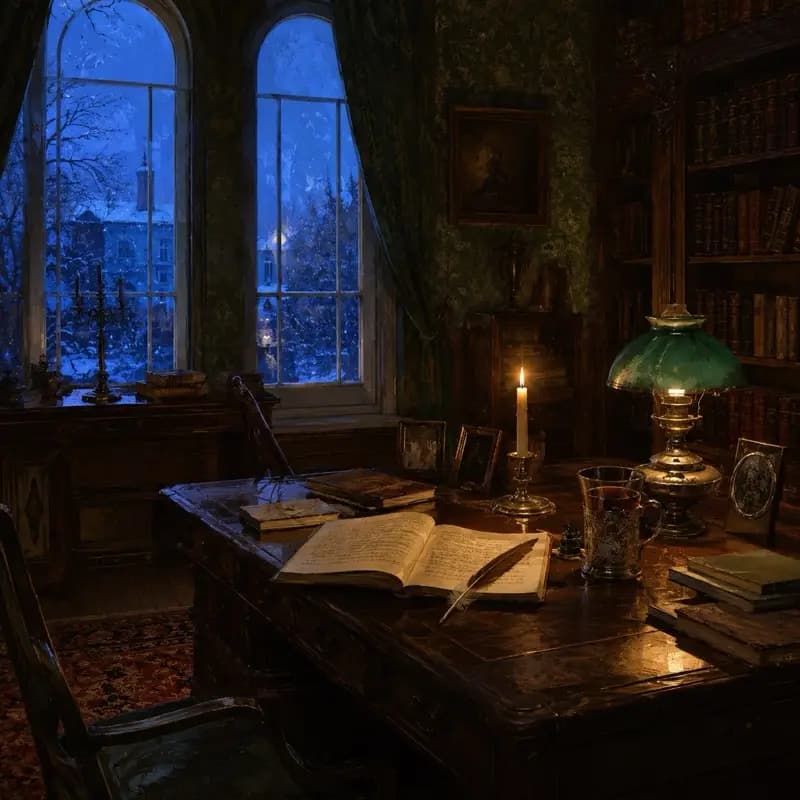
A St. Petersburg drawing room in the late afternoon. Light comes through muslin curtains; someone at the pianoforte is playing a French romance, someone at the window holds a volume of Byron and argues over a line. Between them moves a world in which to be educated is to live in two languages at once, and to feel quite at home in neither.
After the defeat of Napoleon, Russia became a Great Power and at the same time a country that did not understand itself. The educated class read French from childhood, studied philosophy in German, discovered Byronic melancholy in English. They loved and were ashamed of Russian at the same time. The Decembrist revolt of 1825 had already happened and left a long shadow: friends of youth were in Siberia, others were in the imperial service, others had learned to be silent.
Life moved between Petersburg and Moscow, between the capitals and the estates. Petersburg meant balls in the Winter Palace, parades on the Palace Square, literary journals passed from hand to hand and read to pieces, duels over a word said on a staircase. Moscow meant old mansions, gypsy choirs, hospitality, and gossip. The provinces — the estates of Tver, Pskov, Tula — meant libraries, avenues of lindens, ponds reflecting the sky, and serfs whom a master could flog and then instruct in the reading of Karamzin.
Letters took weeks. News from Petersburg reached the provinces when it was no longer quite news. This changed everything: conversations, attachments, expectations. To part was to part for long. To return from abroad was an event. To learn of a friend's death a month after the fact left a different kind of trace than to learn of it at the bedside.
And against this background — literature. This was the generation for which to write verse was not a profession or a pastime but a way of existing. Journals quarreled with journals. A young woman's album was at once a diary, a literary salon, and a coded correspondence. A duel could come from a poem. A poet could die because of his wife's honor.
This era holds lives in many forms — young officers and retired ones, provincial landlords and landladies, graduates of the Smolny Institute and governesses in distant houses, men of letters from impoverished noble families, civil servants who dreamed of other things, and those who inherited their villages along with their debts and did not know what to do with either.